France's 2027 Social Security budget: tobacco tax freeze voted, then wiped out
By Bryan Schmitt · Published on October 22, 2026 · Updated on October 27, 2026
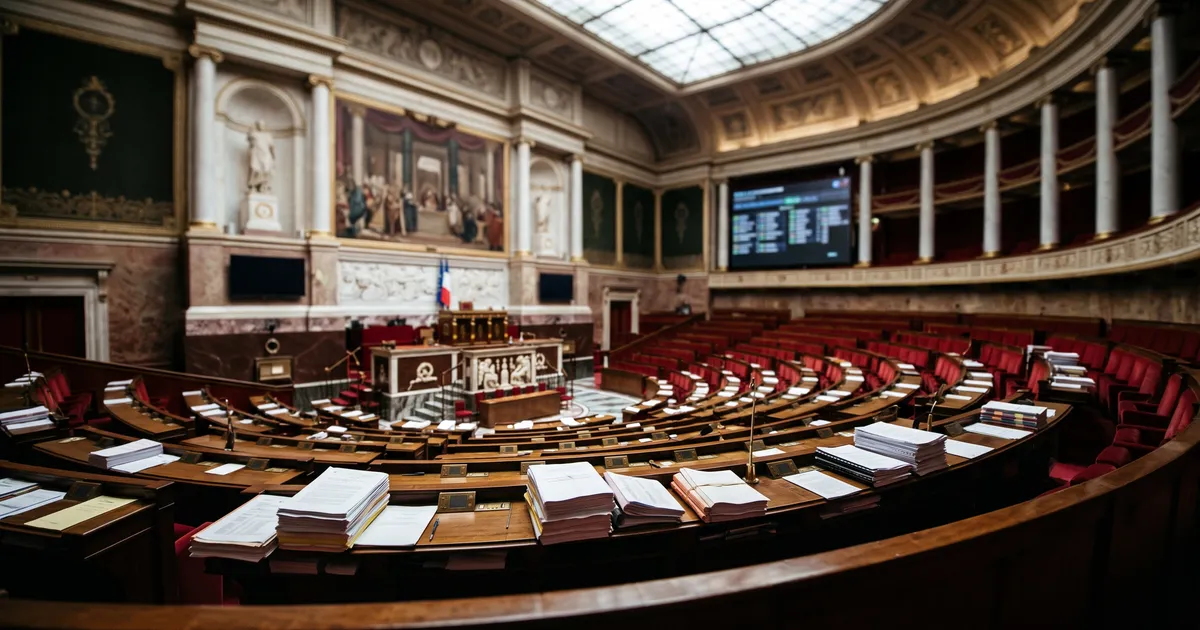
The French Social Security budget bill for 2027 (PLFSS), tabled in the National Assembly (the lower house of Parliament) on 1 October 2026 as No. 3211, contains no measure on tobacco taxation: across its 138 pages, the word only appears in the phrase “inflation excluding tobacco”. Tobacco has nevertheless found its way into the debates, through two opposite doors.
Tobacco entered the debate through two opposite doors: eighteen amendments from six groups sought to freeze or cap the automatic tax increase on 1 January 2027, and Green MPs wanted a smoke-free generation, a lifetime ban on sales to people born from 2009 onwards. On 22 October 2026, at first reading, the National Assembly voted for the freeze and rejected the smoke-free generation. But on 23 October it rejected the whole bill, and the freeze went with it.
What was planned without a vote: indexation of about 2%
In France, the excise duty on cigarettes in 2026 combines a fixed component of €73.30 per 1,000 cigarettes, an ad valorem component of 55% of the retail price and a minimum excise of €381.90 per 1,000 cigarettes, according to the French customs circular of July 2026. The minimum only applies to packs sold for less than €11.22.
Article L. 314-24 of the French code on taxes on goods and services indexes the fixed component and the minimum to inflation every 1 January, with no new vote, with a cap of 3% a year for the minimum. The budget assumes inflation excluding tobacco of 2.1% in 2026: we estimate the increase at about 2%, or 3 cents per pack. Marlboro has cost €13.50 since 1 January 2026; the decree setting the 2027 amounts will be published at the end of December.
The freeze voted on 22 October, wiped out on 23 October
The amendment voted on 22 October, No. 1669, was tabled by David Taupiac (Libertés, Indépendants, Outre-mer et Territoires group). It deletes the two paragraphs of Article L. 314-24 that organise the indexation and provides that the rates and minimums applicable from 1 January 2027 are those of 2026: the fixed component would stay at €73.30 and the minimum at €381.90 per 1,000 cigarettes. The revenue loss is offset, on paper, by a higher excise duty on alcohol. Its author admits that the price may still move on 1 January, since other parameters have "a scheduled increase (notably the eco-contribution)".
- Voted, then wiped out: scrapping the indexation, with the 2026 amounts kept in 2027 (No. 1669), gone with the rejection of the bill on 23 October.
- Fallen: amendments made redundant by that vote, including the 0.9% cap for 2027 (Nos. 861 and 1671 among others).
- Not moved: those that no MP presented on the floor, such as Nos. 76, 182, 530 and 2410.
Their argument appears word for word in several explanatory statements: “in 2026, prices rose by 4% on average, against inflation of about 1% in 2025”. This gap allegedly fuels cross-border purchases and smuggling, and weakens France's 22,500 tobacconists (buralistes). The price gaps are real: in 2026, Marlboro costs €13.50 in France, compared with €6.25 in Spain, €7.70 in Luxembourg and €4.85 in Andorra. According to its explanatory statement, amendment No. 1669 "comes from a proposal by the Confédération des buralistes", the tobacconists' federation.
The smoke-free generation rejected on the floor
During the night of 14 to 15 October 2026, the Social Affairs Committee adopted amendment AS1601 from Green MP Nicolas Thierry. From 1 January 2027, it bans the sale and free distribution of tobacco to anyone born on or after 1 January 2009. Tobacconists who break this rule would pay a levy of 5% of their tobacco turnover to the national health insurance fund (Assurance maladie).
However, the committee rejected the bill as a whole on 16 October, and for a Social Security budget the floor always examines the government's text. Nicolas Thierry therefore tabled the measure again for the floor debate (No. 1536), where it was rejected on 22 October 2026. According to the parliamentary channel LCP, the general rapporteur Thibault Bazin feared a censure by the Constitutional Council as a "legislative rider", a measure without a sufficient link to a budget.
The date chosen was the same as in the United Kingdom, where the Tobacco and Vapes Act 2026 will apply from 1 January 2027 (our article on the smoke-free generation). France will not follow, for now.
A path of increases, not moved
Amendment No. 1534 from Cyrille Isaac-Sibille (Les Démocrates) takes the opposite view to the freeze, with a path of increases from 2027 to 2030 taken from an October 2024 proposal by Yannick Neuder. For cigarettes, it would raise the minimum excise in 2027 to €452 per 1,000 cigarettes, against €381.90 in 2026 (+18%), and the rate to 57.3% against 55%. It was not moved on the floor on 22 October.
But its amounts date from 2024: the fixed component is set at €72.50, below its actual 2026 level (€73.30). The text would therefore mainly raise the price of the cheapest packs, those targeted by the minimum.
What happens next?
On 23 October 2026, the National Assembly rejected the revenue part of the bill by 115 votes to 1, with 22 abstentions. Without approved revenue, the spending part cannot be examined: the whole bill is rejected at first reading, and the amendments voted, the freeze included, disappear. From 9 November the Senate examines the government's original version, which leaves the indexation untouched. Unless there is a new vote, the automatic increase of about 2% will therefore apply on 1 January 2027. The freeze could return through a Senate amendment, then in the joint committee or at a new reading; and if the government uses Article 49.3 to pass the bill without a vote, it chooses which amendments it keeps. We are following these votes here and in our overview of prices on 1 January 2027.
Price remains one of the best-documented levers against smoking (our analysis). If you want to quit, our quit smoking guide lists the methods that work, and the French quitline Tabac Info Service answers free of charge on 39 89.
Sources
- PLFSS for 2027, No. 3211: no tobacco measure, inflation excluding tobacco of 0.9% in 2025 and 2.1% in 2026 (annex).
- Amendment AS1601 adopted in committee and amendment No. 1536 rejected on the floor: smoke-free generation.
- Amendment No. 1669 voted on 22 October, then wiped out, No. 1671 fallen, No. 76 and No. 530 not moved: freezing and capping the indexation, and their outcome on the floor on 22 October 2026.
- National Assembly, rejection of the PLFSS at first reading and division No. 9097 of 23 October 2026: 115 votes to 1, 22 abstentions; Senate legislative file and LCP, 23 October 2026: bill sent to the Senate in its original version, floor debate from 9 November.
- Amendment No. 1534, not moved: path of increases for 2027-2030.
- Article L. 314-24 of the code on taxes on goods and services: annual indexation.
- French customs, tobacco circular of July 2026: excise parameters in 2026.
- National Assembly, rejection of the PLFSS in committee and LCP, 15 October 2026.
Related reading

Tobacco prices in France on 1 November 2026: what changes, brand by brand
France's official price list of 1 November 2026 spares almost all cigarettes: hard-pack Marlboro stays at €13.50, the soft pack goes to €14 and Pall Mall returns at €11.20.

Tobacco prices on 1 January 2027: what changes in Europe, country by country
Increases passed in Germany, Italy and Poland, rates frozen in the Netherlands, Portugal and Spain: what laws and budgets have in store for tobacco prices in 2027.
Tobacco prices in France in 2026: three increases in three months, then stable prices
Marlboro at €13.50, three price hikes between January and March 2026, then stable prices for the major brands: here is what the official price orders say, and how France compares to the rest of Europe.