Beginner e-cigarette guide: how a smoker actually makes the switch to vaping
Published on June 19, 2026 · Updated on September 10, 2026
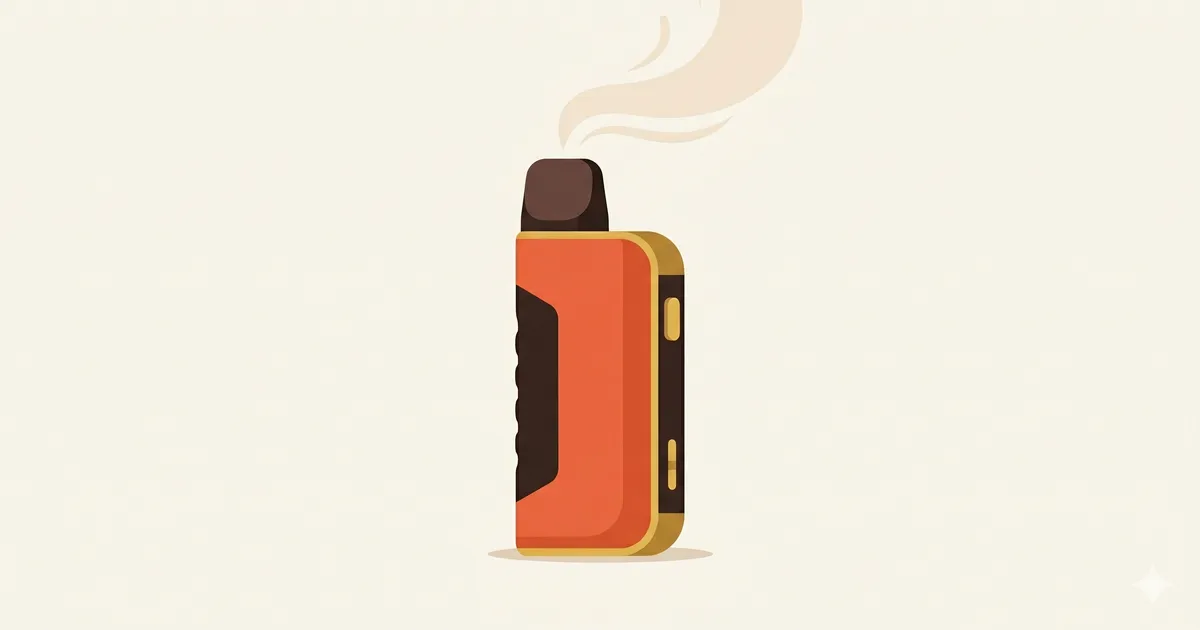
In September 2026, a smoker considering vaping runs into a wall of product listings. This guide recommends no model and names no retailer: it deals with the one question that decides success, how to organise the switch.
Hardware matters less than people think. What causes relapse is a nicotine strength set too low and the absence of a switch date. For the 2026 product and regulatory landscape, see our 2026 overview.
What the research says, and at what level of certainty
The Cochrane review of e-cigarettes for smoking cessation is a living review. Its version published on 26 August 2026, with searches run to 1 January 2026, pools 80 randomised trials and 29,861 participants. It reaches high-certainty evidence: nicotine vaping increases quit rates at six months compared with nicotine replacement therapy, risk ratio 1.61 (95% CI 1.23 to 2.12), across 11 studies and 4,114 participants. In absolute terms that is four extra quitters per 100 smokers (95% CI 1 to 7 more).
Two similar numbers, two different questions: vaping scores 1.61 against nicotine replacement therapy, while nicotine replacement therapy scores 1.55 against a placebo. Those risk ratios are not comparable with each other and cannot be stacked.
The trap is to line these figures up on a single scale. The Cochrane review of nicotine replacement therapy reports a risk ratio of 1.55 (95% CI 1.49 to 1.61) across 133 trials, but against placebo: it measures the gap with taking nothing at all. Vaping's 1.61 measures the gap with an already active treatment. The rest of the 2026 comparisons is weaker: moderate certainty against nicotine-free vaping (1.34, 95% CI 1.05 to 1.69), low certainty against behavioural support alone or no support (1.75, 95% CI 1.39 to 2.20).
Authorities disagree. The NHS recommends vaping to smokers, the WHO calls these products harmful and unproven at population level, and France's public health agency sees a possible aid, with complete cessation remaining the goal. Our article on what the science says covers that disagreement.
Nicotine strength, the decision that matters most
In the European Union, Directive 2014/40/EU caps nicotine e-liquids at 20 mg/ml, refill bottles at 10 ml and tanks at 2 ml. The United Kingdom is no longer bound by that directive but kept the same limits, through the Tobacco and Related Products Regulations 2016. Elsewhere, a product sold as 5% is 50 mg/ml. The NHS principle is simple: pick a liquid with enough nicotine to reduce withdrawal symptoms and urges to smoke.
- The figures below are common practice in specialist shops and stop smoking services: no health authority publishes an official scale.
- Fewer than 10 cigarettes a day: often 6 mg/ml freebase, or 10 mg/ml in nicotine salts.
- 10 to 20 cigarettes: often 12 mg/ml freebase, or 10 to 20 mg/ml in salts.
- More than 20 cigarettes: salts rather than freebase, 16 to 20 mg/ml, since freebase gets harsh at that level.
- Cravings that persist point to a strength set too low. Conversely, the NHS lists headaches, coughing, dry or irritated mouth and throat, shortness of breath among the common side effects of vaping: if they settle in, have a pharmacist review your strength or your device.
The main families of devices
- Closed pod with cartridges: nothing to set or fill, but expensive refills.
- Refillable tight-draw pod: the format most often suggested to a switching smoker, because the draw mimics a cigarette.
- Tight-draw tube or box: more battery life and settings, once a pod feels limiting.
- Airy sub-ohm gear: big clouds, low nicotine, recreational use, not a starting point for quitting.
The classic beginner mistakes
- Under-dosing nicotine, one of the most commonly reported causes of relapse: withdrawal persists, you puff constantly without relief, the cigarette comes back.
- Setting no switch date: smoking and vaping for months does not deliver the expected benefit, because combustion continues.
- Letting the coil die: a burnt taste signals a coil due for replacement, a wear part, not a flaw in vaping.
- Going it alone: added to a treatment, behavioural support has a modest but real effect, and it stacks on top of the treatment. The detail is in our comparison of quitting methods.
The cost, compared with tobacco
Annual cost of one Marlboro pack a day, from our 2026 price data:
- Ireland, 19.20 €: about 7,010 € a year
- United Kingdom, £14.41: about £5,260 a year
- France, 13.50 €: about 4,930 € a year
- Netherlands, 11.80 €: about 4,310 € a year
- Germany, 8.65 €: about 3,160 € a year
- Italy, 6.89 €: about 2,510 € a year
- Portugal, 6.50 €: about 2,370 € a year
- Spain, 5.70 €: about 2,080 € a year
- Poland, 23 zł: about 8,400 zł a year
On the vaping side the recurring cost is liquid and coils, and it varies too much between users for us to publish a price. The NHS gives an order of magnitude: once you have bought the kit, vaping is estimated to cost about a third as much as smoking. Applied to the United Kingdom, a former pack-a-day smoker would land around £1,750 a year instead of roughly £5,260. That is a British estimate carried over onto our prices, not a price survey. Country by country detail in our price comparison, lifetime total in our cost of smoking.
One last point, the most important: vaping is a transition tool, not a leisure product. It is for smokers only, never for non-smokers or minors, and the goal remains stopping nicotine. Nicotine replacement therapy and prescription treatments remain valid, detailed in our quit smoking hub. Ask a doctor, a pharmacist or your national quitline for support.
Sources
- E-cigarettes for smoking cessation, living review, version of 26 August 2026: Cochrane Library
- Nicotine replacement therapy versus control, 133 trials: Cochrane Library
- Position on e-cigarettes: WHO
- Using e-cigarettes to stop smoking: NHS
- Choosing a strength, side effects and cost compared: NHS Better Health
- Effective smoking cessation treatments: Santé publique France
Related reading
Rolling Tobacco vs Packaged Cigarettes: The Price Gap Explained
Rolling your own cigarettes has long cost less than buying a pack. But where does that gap come from, and will it last? We break down the tax and the real cost per cigarette.
Nicotine replacement therapy (patch, gum, spray): how it works and how effective it is
Patches, gum, lozenges, sprays or inhalers: a factual overview of nicotine replacement therapy, how it works and its proven effectiveness for quitting smoking.
Getting Support to Quit Smoking: Counselling, CBT, Helplines and Apps
Brief advice from your doctor, specialist counselling, CBT, free helplines and apps: why support markedly raises your chances of quitting, especially combined with treatment.