Europe wants to shrink the tobacco price gap between countries: what would change for cross-border buyers
Published on September 10, 2026
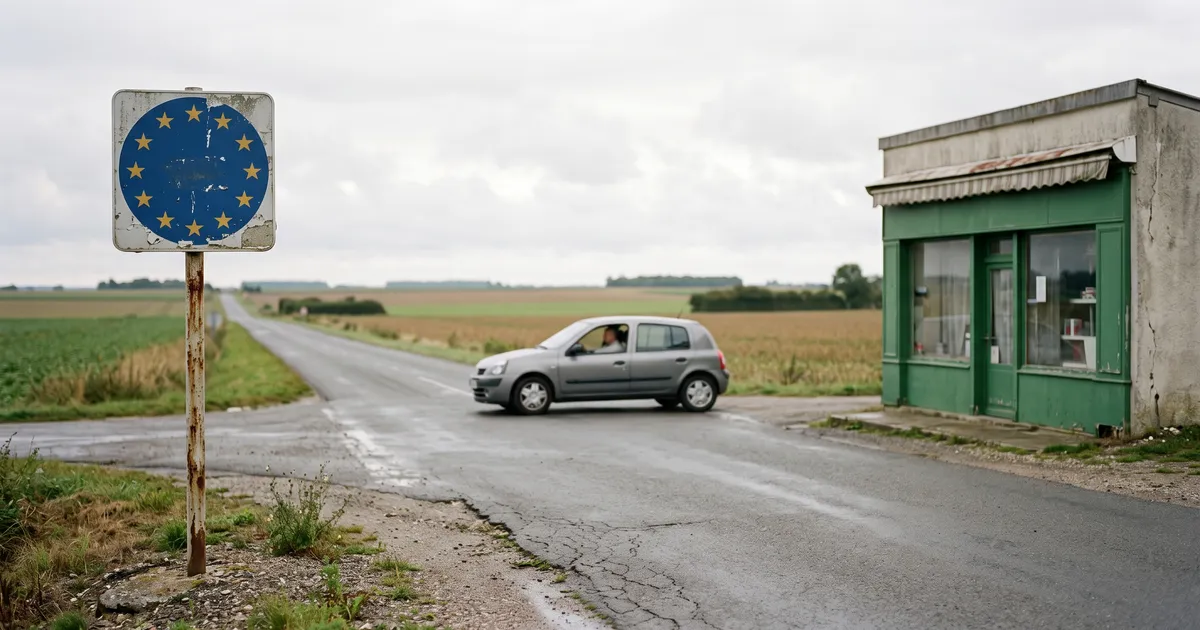
According to our data, a pack of Marlboro costs around €5.29 in Poland and €19.20 in Ireland. That is a 3.6-fold gap inside a single market. It is exactly this gap that the European Commission is trying to close.
Its proposal to revise the tobacco taxation directive has been on the table since July 2025. It still has not been adopted: the European Parliament rejected the proposal in June 2026 and the Council is still negotiating. Here is where the file stands, and what it would change for cross-border buying.
What the current rule says
The text in force is Directive 2011/64/EU. It does not set a retail price, it sets a tax floor. Every member state must levy at least €90 per 1,000 cigarettes, which works out at €1.80 on a pack of 20, and at least 60% of the weighted average retail selling price.
One exception exists: countries applying €115 or more per 1,000 cigarettes are exempt from the 60% criterion. The proposal would push that threshold to €274.
The problem is structural. A floor sets a lower limit, never an upper one. Nothing stops one state from taxing three times more than its neighbour, and that is exactly what happens.
- Poland: around €5.29
- Spain: around €5.70
- Portugal: around €6.50
- Germany: around €8.65
- Netherlands: around €11.80
- France: around €13.50
- Ireland: around €19.20
The full ranking, from cheapest to most expensive, is on our country comparison.
What the Commission is proposing
The revision would raise the floors sharply. For cigarettes, the minimum would go from €90 to €215 per 1,000 cigarettes, and from 60% to 63% of the weighted average price. The two criteria stay cumulative, an “and” rather than the “or” used for other tobacco categories, which narrows the room manufacturers have for tax optimisation. The Commission is aiming for application from 2028, with a four-year transitional period for some products.
- Automatic indexation of the minimums every three years to consumer prices
- A purchasing power parity correction: with a price level index of 110, the minimum becomes €222 per 1,000 cigarettes
- 21 member states would need to raise their rates, six are already above the new thresholds
- 15% of the EU minimum would go to the EU budget, the rest to the consuming country
The proposal also widens the base to heated tobacco, e-cigarette liquids, nicotine pouches and raw tobacco, the latter to curb illicit trade. The Commission puts forward public health, the single market and the fight against fraud. Narrowing price gaps is not a stated objective but a mechanical effect: the cheapest countries climb the most, even though the purchasing power correction also lifts the floor in already expensive countries. The Commission expects an increase of €1 to €2 per pack.
Why the file is not moving
On tax matters the Council decides unanimously. A single member state is enough to block the text, and the European Parliament has only a consultative role. On 17 June 2026, under the consultation procedure, it adopted a legislative resolution rejecting the Commission proposal by 439 votes to 181, with 38 abstentions, and called for its withdrawal.
An EU tax law requires unanimity among all twenty-seven states. That rule is why the minimum rates have not moved in over a decade.
The file passed to the Irish Council presidency in July 2026, after a Cypriot presidency with no agreement. According to the Commission's TEDB tax database, Ireland applies the highest cigarette excise duty in the Union: the country chairing the negotiations is therefore the one with the least to change.
What it would change for cross-border buying
If the text passes, the cheapest countries are mechanically the most affected. Poland, Spain and Portugal would see their floor rise more than France or Ireland, already far above the minimums. A trip like Germany to Poland would lose part of its point.
One key point: Andorra is not a member of the European Union. At around €4.60 a pack, the principality would stay entirely outside the scope of this directive. The same goes for Switzerland, the United Kingdom, Morocco and Tunisia.
Remember that the quantities you may carry are governed by customs allowances, whatever the price you paid. We set them out in our guide to buying cigarettes abroad.
Finally, the underlying logic of this directive is public health: raising prices remains the single most effective lever for reducing smoking. If you are thinking about quitting, our dedicated section reviews the methods and how well they actually work.
Sources
- Minimums in force set by Directive 2010/12/EU, applicable since 1 January 2014 and codified by Directive 2011/64/EU: European Commission
- Revision proposal tabled on 16 July 2025: European Commission
- Figures in the proposal, €215, 63% and 2028: European Commission questions and answers, 16 July 2025
- Parliament's rejection of the proposal on 17 June 2026: Legislative Observatory, file tracking on the Legislative Train
- Excise by member state: European Commission TEDB tax database
- Prices by country: cigprices.com data, methodology on our country comparison
Related reading
Spain set to ban smoking on terraces, beaches and parks, what tourists need to know
The Spanish government approved a draft law on 21 July 2026 that would ban smoking on bar terraces, beaches, swimming pools and university campuses. Vaping is included too. Here is what smokers visiting Spain need to know.
Tobacco prices in France in 2026: six increases in eight months, and more to come
Marlboro at €13.50, six price hikes between January and November 2026: France has never raised cigarette prices so fast. Here is why, and how France compares to the rest of Europe.
Smoke-Free Generation: the UK bans cigarettes for life for those born after 2009, and others are following
On 29 April 2026, the UK became the first major country to permanently ban tobacco sales to anyone born after 2009. A landmark shift in global tobacco control that several nations are now considering.