Why Are Cigarettes So Expensive? The Tax Share Explained
By Bryan Schmitt · Published on June 28, 2026
In 2000, a pack of Marlboro cost about €3.20 in France. In 2026, it tops €13. In the United Kingdom, Europe's most expensive market, it nears €17. By contrast, some markets such as Tunisia or Andorra stay around €3. Where does such a gap come from? The answer fits in one word: taxation. Here, calmly, is how the price you see on the shelf is built.
The structure of a pack's price: who gets what
When you pay for a pack, the money is split between three main beneficiaries: the State (by far the biggest), the manufacturer (which produces and markets the product) and the retailer (the tobacconist or point of sale). Contrary to intuition, the industrial cost of tobacco and manufacturing is only a small fraction of the final price.
Most of what you pay therefore goes neither to the producer nor to the shopkeeper, but to the public purse, in the form of taxes levied on every pack sold.
The three tax components: specific excise, proportional excise and VAT
Tobacco taxation rests on three distinct building blocks, which add up:
- Specific excise: a fixed amount levied per unit (per pack or per thousand cigarettes), regardless of the selling price.
- Proportional excise (ad valorem): a tax calculated as a percentage of the selling price. The more expensive the pack, the higher this amount.
- VAT: the general consumption tax, applied as for most products, but here on top of an already heavily taxed price.
Combining a fixed part with a proportional part is deliberate: it lets governments guarantee a minimum of revenue per pack while tracking price changes. The balance between these components explains much of the difference from one country to the next.
Why taxes make up 70 to 80% of the selling price
Once the three components are stacked, taxes generally make up 70 to 80% of a pack's price in European countries. In other words, on a €13 pack, the bulk goes to excise duties and VAT; only a limited portion is left to be shared between industry and retail.
This high level is no accident: it stems from public health choices (discouraging consumption through price) and from budget revenue. Most States have adopted multi-year increase paths.
On a pack sold around €13, taxes capture the bulk: what you pay is above all a tax.
What actually remains for the manufacturer and the retailer
Once the State has been served, the remainder (roughly 20 to 30% of the price) must cover both the manufacturer and the retailer. The manufacturer draws from it the cost of production, distribution, marketing and its margin. The tobacconist receives a regulated commission, often expressed as a percentage of the selling price.
In practice, the retailer's net margin on a pack stays modest relative to the displayed price: most of the receipt does not go to them. This is a recurring source of tension during price hikes, because the price climbs without the retailer's share rising in the same proportions.
Why the tax share varies from one country to another
If the same pack can cost €3 here and €17 elsewhere, it is because each country freely sets the level and balance of its excise duties, within a common framework for European Union members. Several factors come into play:
- The amount of specific excise chosen per unit.
- The weight of the proportional part and the national VAT rate.
- The reference price level and local purchasing power.
- Political strategy: some countries use price as an anti-tobacco lever, others stay more cautious.
The result: the United Kingdom ranks at the top (~€17), France has caught up sharply (over €13), while markets such as Tunisia or Andorra stay around €3. For the same international brand, the gap can range from one to fivefold.
What this means for the smoker
The consequence is direct: when the price of a pack climbs, it is almost always a tax decision, not a surge in the cost of tobacco. The main lever is in the hands of governments. And the trend remains upward: the European Union is preparing a revision of its tobacco directive, nicknamed "TPD3", expected around 2028-2030, which could harmonise some taxes upward.
Understanding this mechanism simply helps you read your receipt: behind the price lies, above all, a public-policy choice.
Related reading
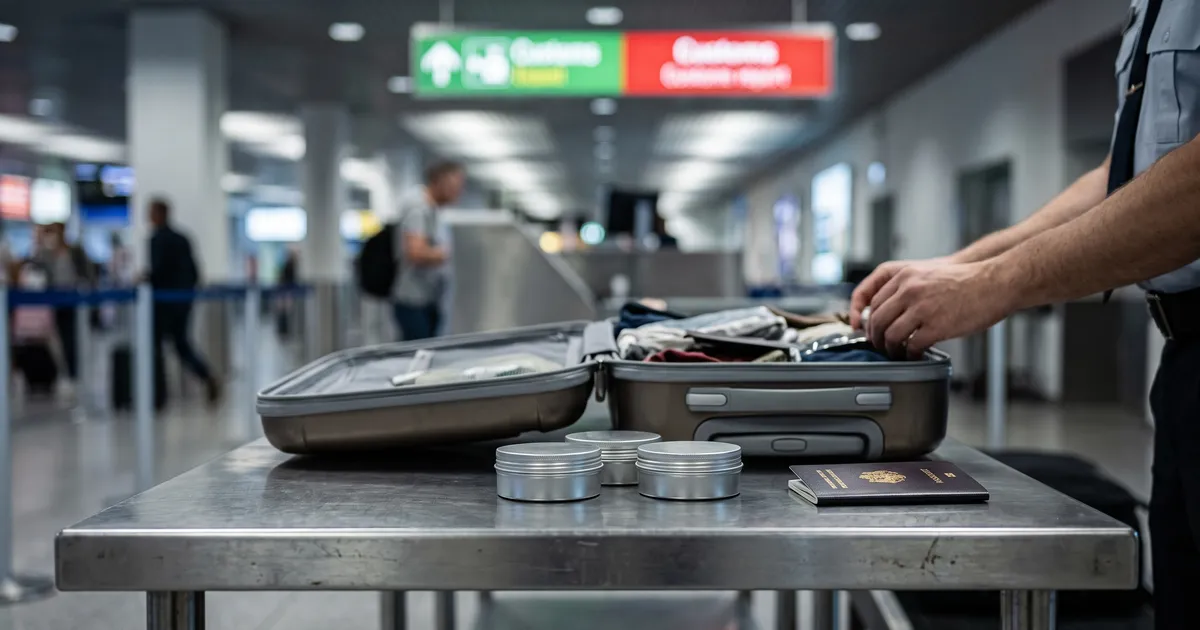
Travelling with nicotine pouches: what customs actually says, country by country
There is no European allowance for nicotine pouches. The law of the country you enter is what applies, and where they are banned the permitted quantity is zero.
Rolling Tobacco vs Packaged Cigarettes: The Price Gap Explained
Rolling your own cigarettes has long cost less than buying a pack. But where does that gap come from, and will it last? We break down the tax and the real cost per cigarette.
Nicotine replacement therapy (patch, gum, spray): how it works and how effective it is
Patches, gum, lozenges, sprays or inhalers: a factual overview of nicotine replacement therapy, how it works and its proven effectiveness for quitting smoking.