Tobacco prices in Europe: what 26 years of records show (2000-2026)
By Bryan Schmitt · Published on June 28, 2026 · Updated on September 11, 2026
In 2000, a pack of Marlboro cost €3.20 in France. In 2026 it costs €13.50. The same pack is €19.20 in Ireland and €5.29 in Poland. We have tracked these price series across 17 countries since 2000. Here is what they actually show.
Twenty-six years of rises, at very different speeds
To compare countries that do not share a currency, we work in local-currency multipliers, meaning the ratio between the 2026 price and the 2000 price. No exchange rate enters that calculation, it cancels out. The result contradicts the received wisdom of a uniform "three to fourfold" rise across Western Europe. Here are the steepest increases on a pack of Marlboro:
- Tunisia: x7.0, from 1.50 to 10.50 dinars
- Italy: x5.1, from €1.34 to €6.89
- Poland: x4.6, from 5.04 to 23 zlotys
- Belgium: x4.4, from €2.95 to €13.00
- Portugal: x4.3, from €1.50 to €6.50
- France: x4.2, from €3.20 to €13.50
At the other end, Switzerland merely doubled, x2.1, from 4.60 to 9.70 francs. [Spain](/pays/espagne) is at x2.7 and Austria at x2.8. The real range therefore runs from 2.1 to 7.0, not from 3 to 4.
The 2026 ranking, converted to euros
Once every price is converted to euros, the Marlboro pack lines up like this in 2026:
- Ireland €19.20, United Kingdom €17.00, France €13.50, Belgium €13.00
- Netherlands €11.80, Switzerland €10.19, United States €9.57, Germany €8.65
- Luxembourg €7.70, Austria €7.00, Italy €6.89, Portugal €6.50
- Spain €5.70, Poland €5.29, Andorra €4.60, Morocco €3.86, Tunisia €3.15
Across all 17 tracked countries the gap reaches 6.1 times, between Tunisia and Ireland. Within the European Union alone it is still 3.6 times, between Poland and Ireland. The full country comparison gives the detail brand by brand.
Taxation explains almost everything
It is not tobacco that is expensive, it is what the state puts on top of it. Taxes, excise duty and VAT together, account for 70 to 80% of the price of a pack in the European Union. A country that raises its excise moves the retail price almost one for one, regardless of what the product actually costs.
These rises were rarely accidental. Several countries voted multi-year tax roadmaps, with a price target announced years in advance. That is why immediate neighbours can drift so far apart.
Two divergences that tell the whole story
Spain and Germany. In 2000 a pack was €2.11 on one side and €2.81 on the other, a gap of 70 cents. In 2026 it is €5.70 against €8.65: the gap has quadrupled and is close to €3. Two countries that started together, two opposite tax policies.
Italy. It shows the steepest rise in the European Union over the period, x5.1, and yet a pack there is still €6.89, far behind France. The reason lies in the starting point: €1.34 in 2000, the lowest level in Western Europe. A large multiplier applied to a small base gives a small price.
What these figures do not say
These are nominal euros, with no correction for inflation. Part of the rise is simply the general rise in prices, and that is not the interesting part. We strip it out in our comparison of tobacco inflation against general inflation.
On reliability, to be precise: the 2026 prices are surveyed, the historical series are partly reconstructed. Of the 17 Marlboro series, 3 are confirmed end to end and 14 contain points interpolated between verified anchors. Every country page shows its confidence index, so you know what the figure you are reading is worth.
And after 2026
Nothing points to a reversal. The European Commission wants to raise the excise floor from €90 to €215 per 1,000 cigarettes, which would narrow the gap from the top, but the text is stuck in the Council: we set out where the file stands. In the meantime the gaps remain, and with them the temptation to buy across the border. Customs allowances put strict limits on the quantities.
If these amounts give you one more reason to quit, our guide to quitting smoking reviews the methods and how well they actually work. In France, Tabac Info Service answers free of charge on 39 89.
Sources
- Excise rates in force in each member state: European Commission
- Detailed rates by product and country: TEDB tax database
- Harmonised index of consumer prices, annual series: Eurostat
- Proposed revision of the directive, floor raised to €215: European Commission
- Price records 2000-2026 across 17 countries and their confidence index: our database
Related reading
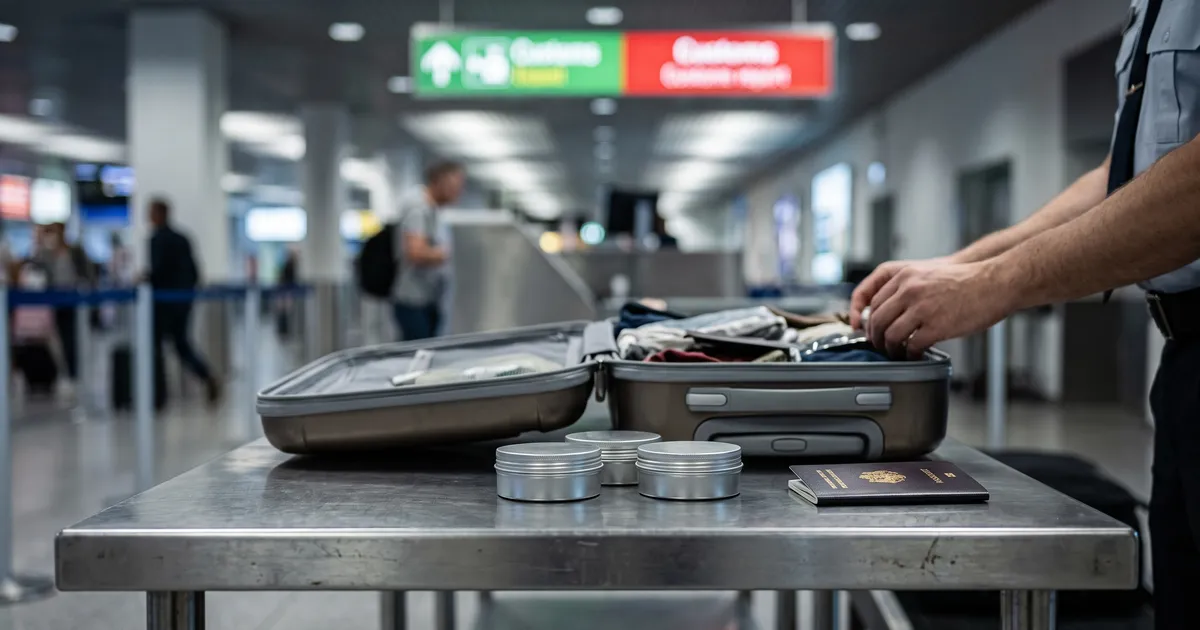
Travelling with nicotine pouches: what customs actually says, country by country
There is no European allowance for nicotine pouches. The law of the country you enter is what applies, and where they are banned the permitted quantity is zero.
Rolling Tobacco vs Packaged Cigarettes: The Price Gap Explained
Rolling your own cigarettes has long cost less than buying a pack. But where does that gap come from, and will it last? We break down the tax and the real cost per cigarette.
Nicotine replacement therapy (patch, gum, spray): how it works and how effective it is
Patches, gum, lozenges, sprays or inhalers: a factual overview of nicotine replacement therapy, how it works and its proven effectiveness for quitting smoking.