Spain's smoking ban on terraces and beaches on hold until after the election, what tourists need to know
By Bryan Schmitt · Published on September 1, 2026 · Updated on October 11, 2026
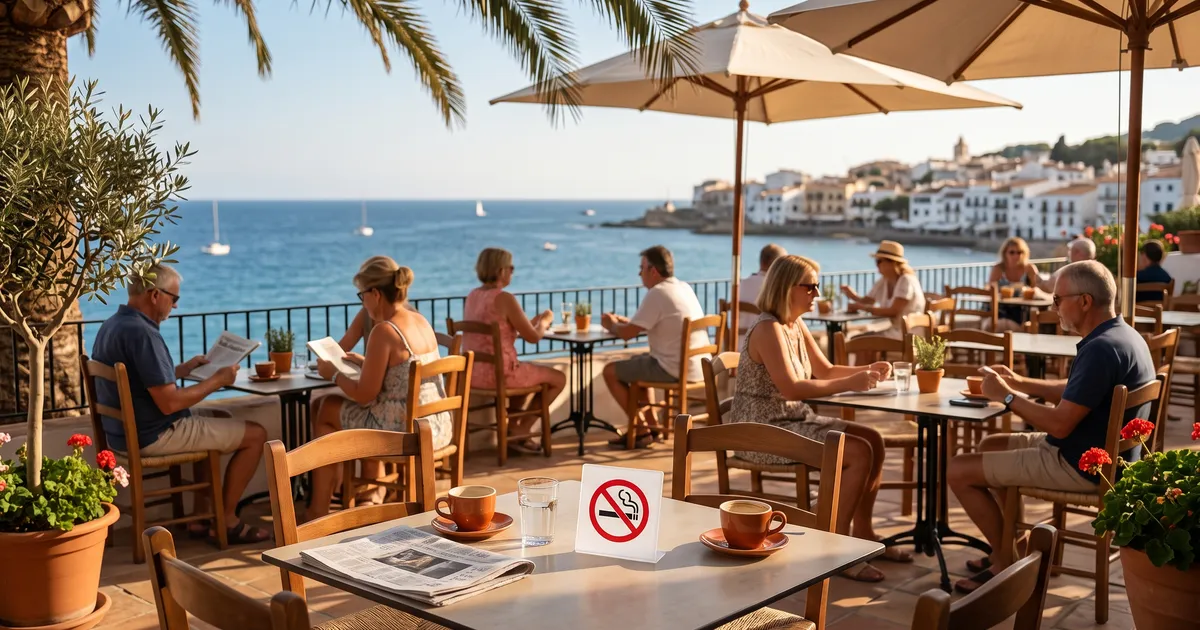
Spain is one of the cheapest countries in Western Europe for cigarettes: €5.39 a pack on average, against €12.76 in France. Millions of European tourists stock up on tobacco there every summer. Yet on 21 July 2026, the Spanish government approved one of the continent's most ambitious anti-tobacco bills: it would have banned smoking on bar terraces, beaches, swimming pools and university campuses.
That text will not complete its passage. Published in the Official Bulletin of the Cortes on 11 September 2026, it lapsed when Royal Decree 806/2026 of 5 October 2026, published in the BOE the following day, dissolved the Congress of Deputies and the Senate and called a general election for 29 November 2026. Article 207 of the Rules of Procedure of the Congress is explicit: dissolution causes every matter awaiting examination to lapse. If it were ever revived and passed, it would be the biggest extension of smoke-free spaces in Spain since 2010.
Where would smoking be banned?
If the bill were revived as written, the smoke-free zones would expand significantly. Here are the spaces it covered:
- Terraces of bars, restaurants and food-service establishments
- Coastal and river beaches
- Public and collective swimming pools
- Sports facilities and concert venues
- National parks and protected natural spaces
- Bus shelters and public transport waiting areas
- University campuses
- Work vehicles (except when used exclusively for personal purposes)
Vaping and heated tobacco are included too
The bill is not limited to conventional cigarettes: e-cigarettes, with or without nicotine, heated tobacco (such as IQOS) and water pipes would be subject to the same bans. A tobacco-free terrace would therefore also be a vape-free terrace. Only nicotine pouches escape the ban on use in these places, but they remain prohibited for minors.
A 15-metre smoke- and vaping-free zone would be established around the entrances to hospitals, schools, universities, public buildings and children's playgrounds. This buffer is designed to protect the most vulnerable people at the points where they are most likely to be present.
What fines are planned?
The bill sorts offences into three levels. Smoking or vaping in a banned place is a minor offence: the fine is up to €200 for an isolated incident, while other minor offences carry €200 to €600. On the third offence of this kind, the smoker moves up into the serious category.
For a bar or restaurant, allowing smoking where it is banned, or setting up an unauthorised smoking area, is a serious offence, punishable by €601 to €10,000. The often-quoted ceiling of €600,000 applies only to very serious offences: advertising, promotion and sponsorship of tobacco and vaping products.
The text also creates a first ban on tobacco use by under-18s, whereas current law only targets sales to minors. It is a minor offence (€200 to €600), the fine is paid by parents or guardians, and it can be replaced by a prevention programme or community service.
What happens to the bill after the dissolution?
The Bureau of Congress had registered the bill on 8 September 2026 and referred it to the Health Committee with full legislative competence: the committee, not the plenary, would have voted on the final text. That procedure stopped dead when the Cortes were dissolved by the royal decree of 5 October 2026: under Article 207 of the Rules of Procedure of the Congress, the bill lapsed, like every other pending text. For it to come back, these steps would be needed:
- General election on 29 November 2026
- Constitutive sessions of the new Congress and Senate on 23 December 2026
- Formation of a government following the election
- Fresh approval of the bill by the Council of Ministers, then a new filing in Congress
- The full parliamentary procedure again, the Senate stage, publication in the BOE and entry into force 20 days later
No date can therefore be given today, and nothing guarantees that the next government will take the text up again. On the ground, nothing changes: the current rules apply, meaning no smoking inside bars and restaurants since 2011 and terraces allowed, except where some autonomous communities impose stricter rules.
"The aim is very simple: that breathing clean air should be the norm in shared spaces, and that the right to health should not depend on where you happen to be." Mónica García, Spanish Minister of Health, 21 July 2026
Why is Spain changing course?
No major reform had followed the ban on smoking inside bars and restaurants in 2011. According to the bill's explanatory memorandum, the share of 15 to 64 year olds who smoke daily fell from 32.8% in 2005 to 25.8% in 2024 (EDADES survey), a slow decline. Among 14 to 18 year olds, vaping in the past month almost doubled, from 14.9% in 2019 to 27.1% in 2025 (ESTUDES survey), hence vaping being brought into line with tobacco.
For tourists, the rules on buying do not change. Between two EU countries, the guide level remains 800 cigarettes (4 cartons) per person, but travellers returning to the UK are limited to 200: see our guide to customs rules on tobacco bought abroad and the price comparison by country. What would change, if the text were revived, is where you can smoke once there.
If these restrictions are a prompt to quit, it is best to rely on methods with proven effectiveness: our quit-smoking guide compares them.
Sources
- Bill amending Law 28/2005, Official Bulletin of the Cortes, 11 September 2026
- Royal Decree 806/2026 of 5 October 2026 dissolving the Congress and the Senate and calling the election, BOE
- Rules of Procedure of the Congress of Deputies, Article 207, consolidated text, BOE
- Council of Ministers of 21 July 2026, La Moncloa
- Spanish Ministry of Health press release, 21 July 2026
- Law 28/2005, consolidated version, BOE
- Carrying tobacco in the EU, Your Europe
- Allowances when entering the UK, GOV.UK
Related reading
Luxembourg raises tobacco taxes on 1 January 2027, but stays far below French prices
Luxembourg's draft budget raises the minimum excise on cigarettes by 8% on 1 January 2027, or 25 to 30 cents a pack by our calculation. Marlboro would stay under €8, against €13.50 in France.
Australia: a €25 pack of cigarettes, and tobacco revenue down by three quarters
In Australia, a pack of 20 costs €25 to €42 and the duty alone exceeds €19. Yet tobacco revenue has fallen fourfold since 2021: the black market now dominates.
Netherlands: more than half of smokers buy tobacco abroad
Dutch tobacco excise has doubled since 2020, yet its revenue fell 15% in 2025: more than half of smokers now buy abroad. Prices compared and customs rules.