Nicotine Pouches (Zyn, VELO, Lyft): Legal or Banned in Your Country? The 2026 Europe Guide
By Bryan Schmitt · Published on June 23, 2026 · Updated on September 22, 2026
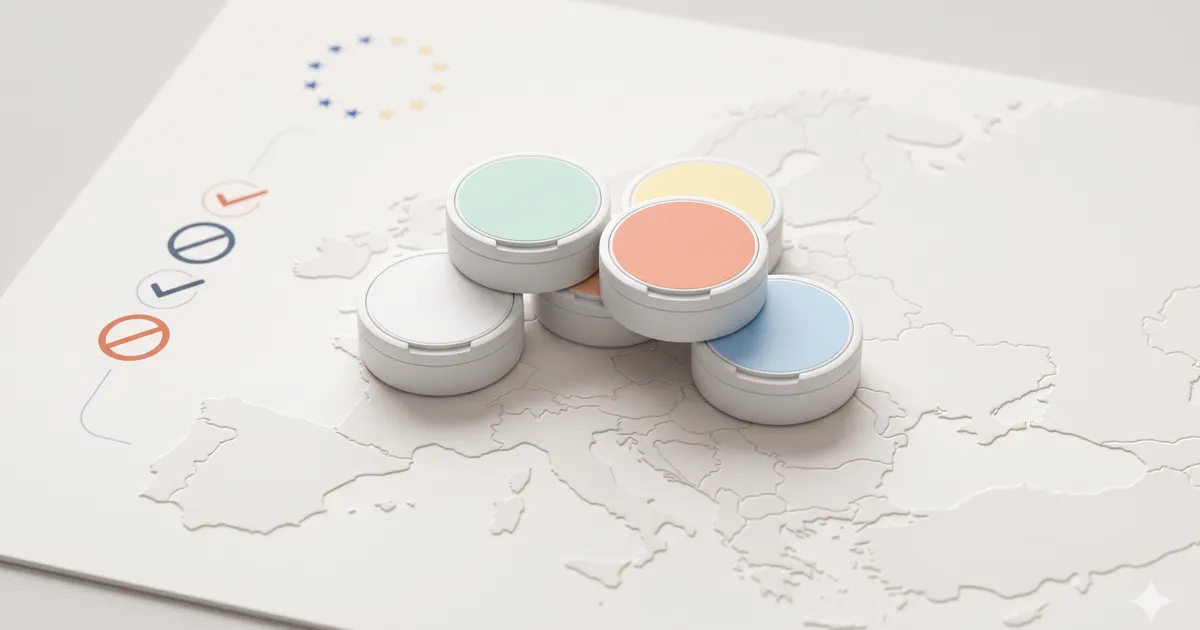
You may have seen them at a tobacconist, online, or tucked under a colleague's lip: nicotine pouches are small white sachets placed under the upper lip. No tobacco, no smoke, no vapour. They deliver nicotine directly through the oral mucosa. Brands like Zyn (Philip Morris), VELO (British American Tobacco) and Lyft sell them across Europe.
Over the past few years, these products have exploded in popularity, especially among young people and smokers seeking a discreet alternative. That success has provoked very different responses depending on the country: total ban in France, free market in the UK, regulated framework in Italy. The result? A genuine legal headache for anyone who travels or shops online.
What is happening in France: a two-speed ban
On 5 September 2025, a decree published in France's Official Gazette set out a ban on nicotine pouches from 1 April 2026, covering the full chain: manufacture, import, sale, possession, acquisition and use. The French food safety agency ANSES concluded that these products created nicotine dependence and could cause acute nicotine poisoning (vomiting, convulsions).
However, on 22 December 2025, the Conseil d'État suspended part of the decree (specifically the production and retail sale provisions) pending a final ruling. As of 1 April 2026, the situation is ambiguous: using, possessing, importing and acquiring nicotine pouches are technically banned in France, but retail sale remains in legal limbo. In practice, tobacconists pulled these products from their shelves, and bringing pouches back in your luggage from abroad exposes you to sanctions. The litigation has since been settled: on 13 July 2026 the Conseil d'État held the ban on offering, transferring, acquiring and using these products lawful, and referred to the Court of Justice of the European Union only the case of operations aimed at sale in another member state. On the travel side, see our guide to carrying nicotine pouches.
The European overview: who allows, who bans?
- 🇫🇷 France: use, possession and import banned since 1 April 2026 (retail sale legally suspended)
- 🇧🇪 Belgium: total ban since 2025
- 🇳🇱 Netherlands: total ban since 2025
- 🇩🇪 Germany: banned if nicotine content exceeds 20 mg per pouch (eliminates most mainstream brands)
- 🇩🇰 Denmark: legal from April 2026 but capped at 9 mg nicotine, only tobacco and menthol flavours
- 🇸🇪 Sweden: fully legal, same framework as traditional snus, harm reduction policy
- 🇬🇧 United Kingdom: legal and widely available in shops and online, no flavour ban
- 🇪🇸 Spain: legal in 2026, but proposed legislation could cap nicotine at 0.99 mg (which would make them ineffective)
- 🇮🇹 Italy: legal since 2023, subject to an excise tax of €22/kg, sold in licensed tobacconists
- 🇵🇹 Portugal: legal but taxed since 2026 (€0.065/gram)
Sweden: the model that unsettles Europe
Sweden is a special case. It has the lowest smoking rate in the European Union (under 5% of adults) and it is also the only EU country where snus (oral tobacco) is legally sold. Its policy is built around harm reduction: rather than banning all forms of nicotine, it permits less harmful alternatives to cigarettes. Nicotine pouches have been sold freely there for years.
Public health researchers often cite Sweden as evidence that harm reduction outperforms outright prohibition. On the other side, advocates for bans (including the WHO and French health authorities) argue that these products create new addictions, particularly among people who would never have smoked in the first place.
Are they really less dangerous than cigarettes?
The honest answer: probably yes, but not risk-free. Nicotine pouches contain no tobacco, so no tar and no combustion products, which are responsible for the vast majority of tobacco-related cancers. For this reason, they are considered less harmful than cigarettes by most independent scientific bodies.
However, nicotine itself remains highly addictive, regardless of how it is consumed. It is not recommended for pregnant women, teenagers, or people with heart conditions. And some high-dose pouches (20-50 mg) can cause acute nicotine poisoning, especially in non-smokers unfamiliar with the product.
"These products can serve as a gateway to nicotine addiction for populations who would never have accessed cigarettes." ANSES (French food safety agency), report on nicotine pouches, 2025
TPD3: a common European regulation expected by 2029-2030
The European Union is working on TPD3 (Tobacco Products Directive 3), a revision of the EU tobacco directive that will include nicotine pouches for the first time. The aim is to harmonise rules across member states, ending the current patchwork. But the directive is unlikely to take effect before 2029 or 2030. Until then, each country can do as it pleases.
What this means for you in practice
If you are in France, avoid nicotine pouches: bringing them back in your luggage from Spain or Italy exposes you to sanctions. If you smoke and are looking for quit support, speak to your doctor rather than turning to these unregulated products. In the UK, free NHS Stop Smoking services are available, your GP is the best first step.
If you are in a country where they are legal, remember that nicotine pouches are not medically validated quit aids. They are not nicotine replacement therapy in the pharmaceutical sense. For recognised, subsidised help, medical nicotine patches, gum and lozenges remain the gold standard, supplemented if needed by prescription medications like varenicline. The full price comparison by country is here.
Related reading
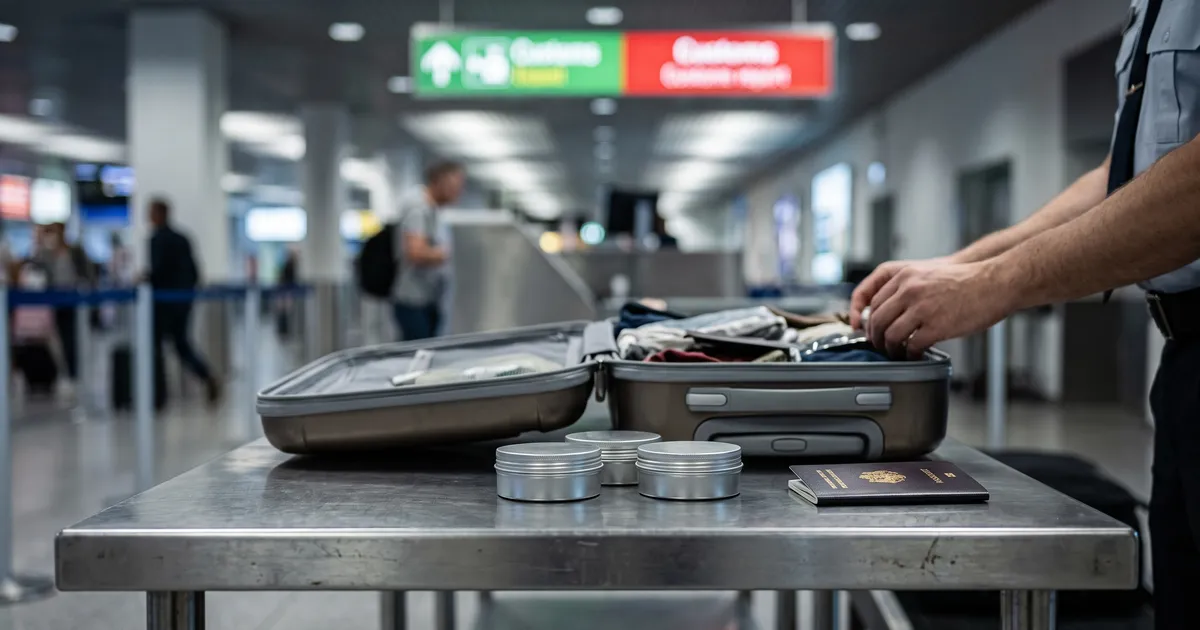
Travelling with nicotine pouches: what customs actually says, country by country
There is no European allowance for nicotine pouches. The law of the country you enter is what applies, and where they are banned the permitted quantity is zero.
Rolling Tobacco vs Packaged Cigarettes: The Price Gap Explained
Rolling your own cigarettes has long cost less than buying a pack. But where does that gap come from, and will it last? We break down the tax and the real cost per cigarette.
Nicotine replacement therapy (patch, gum, spray): how it works and how effective it is
Patches, gum, lozenges, sprays or inhalers: a factual overview of nicotine replacement therapy, how it works and its proven effectiveness for quitting smoking.