Tobacco prices: what to expect by 2030
By Bryan Schmitt · Published on June 28, 2026
In 2000, a pack of Marlboro cost around 3,20 € in France. By 2026 it tops 13 €, and in the United Kingdom it nears 17 €. This trajectory is no accident: it stems from public-health and tax choices pursued over two decades. So what should we expect by 2030? Rather than gamble on a precise figure, this article takes a calm look at the forces at play and the most likely scenarios.
The underlying trend: increases that show no sign of easing
For twenty-five years, tobacco prices have risen faster than inflation across most of Europe. The driver is well known: taxes already make up 70 to 80 % of a pack's price, and governments rely on this tool to curb consumption. Nothing points to a change of course. Public-health bodies instead recommend maintaining, or even accelerating, this movement, because price remains the most effective lever for reducing smoking, especially among young people.
The overall direction is therefore clear: upward. The uncertainty lies less in the direction than in the pace and scale of the increases to come.
The EU's "TPD3" review
One file dominates the coming years: the revision of the European tobacco products directive, often referred to as "TPD3", expected around 2028-2030. Several avenues are on the table, none yet settled:
- A possible upward harmonisation of excise duties, raising the minimum tax in countries where tobacco remains cheapest.
- An extension to new products, notably vaping and nicotine pouches, which today are often taxed less than conventional cigarettes.
- Tighter rules on packaging, advertising and traceability.
If this harmonisation succeeds, price gaps between European countries could narrow, mechanically pulling up the most affordable markets. But the European timetable is long and negotiations between member states uncertain, so caution is warranted on the deadlines.
National trajectories: multi-year plans
Beyond the European level, several countries have already written scheduled increases into their tax calendars. Some publish a multi-year roadmap, raising duties in regular steps each year. Others have set themselves "smoke-free" targets for the near future, with price as the central instrument.
In practice, in several countries smokers can expect annual increases, sometimes already voted in advance. This visibility is new: a rise is no longer a one-off event but an openly stated trajectory.
Towards packs at 15-20 €?
Should we imagine a pack at 15, or even 20 € by 2030? It is a plausible projection, not a certainty. If we simply extend the pace seen in recent years in the priciest countries, and the European review materialises, a pack around 15-20 € in several Western European markets would be far from absurd. The United Kingdom, already near 17 €, shows that such levels are reachable.
But this is an extrapolation. A political decision, a change of majority or a tense economic climate could slow or suspend these increases. It is therefore better to speak of a trend than of a numbered prediction.
The uncertainty factors
Several elements could bend this trajectory:
- The rise of the parallel market: the higher the official price climbs, the more attractive smuggling and cross-border purchases become, which can cap tax revenue.
- Social and political pushback: increases seen as too rapid can meet resistance from consumers and tobacconists.
- The shift towards vaping and smoke-free products, which changes the taxable base and forces governments to rethink their fiscal approach.
These factors do not reverse the trend, but they complicate the reading. They explain why no serious institution puts forward a guaranteed figure for 2030.
What it means for the smoker
For someone smoking a pack a day, the arithmetic is stark: at 13 €, that is already nearly 4 700 € a year. At 18 €, it would exceed 6 500 €. Over the decade, the bill runs into tens of thousands of euros, before counting the cost to health.
With prices set only to climb, quitting smoking looks, coldly, like the best possible investment: a benefit that is both financial and medical.
Whatever the exact path of prices, the conclusion is the same. Being supported towards quitting by a healthcare professional is the most profitable decision in the long run, and the only one that truly protects health.
Related reading
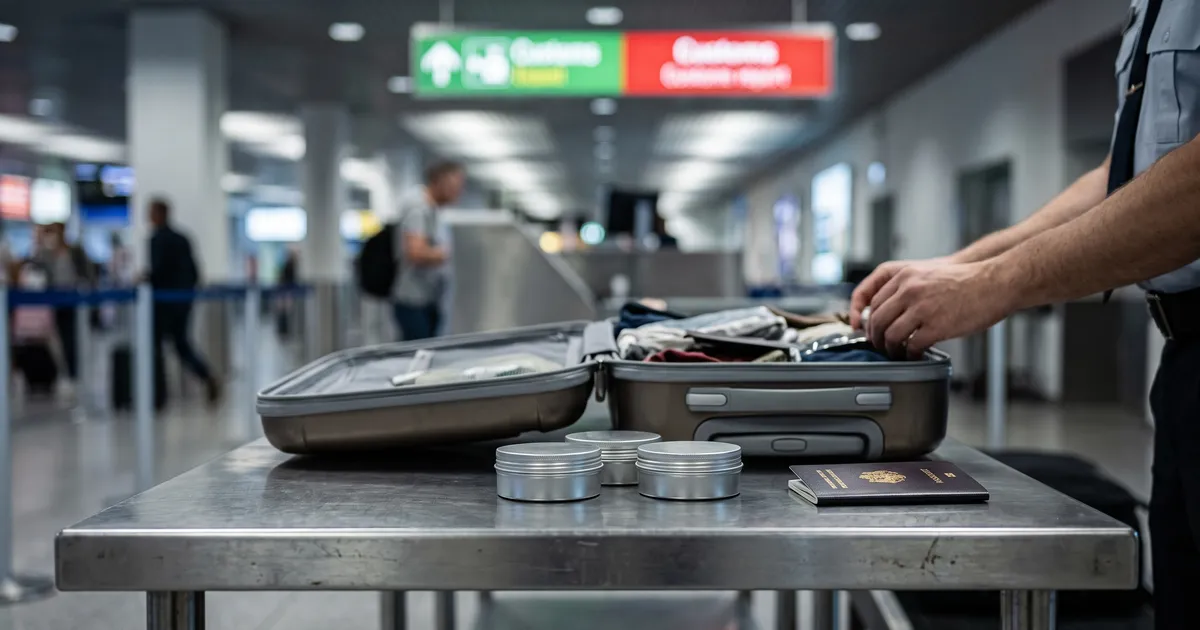
Travelling with nicotine pouches: what customs actually says, country by country
There is no European allowance for nicotine pouches. The law of the country you enter is what applies, and where they are banned the permitted quantity is zero.
Rolling Tobacco vs Packaged Cigarettes: The Price Gap Explained
Rolling your own cigarettes has long cost less than buying a pack. But where does that gap come from, and will it last? We break down the tax and the real cost per cigarette.
Nicotine replacement therapy (patch, gum, spray): how it works and how effective it is
Patches, gum, lozenges, sprays or inhalers: a factual overview of nicotine replacement therapy, how it works and its proven effectiveness for quitting smoking.