Tobacco: an inflation of its own, far above the average
By Bryan Schmitt · Published on June 28, 2026
When we talk about inflation, we picture the general rise in prices: food, energy, housing, services. But one product follows a path of its own, far steeper than the average: tobacco. Since the early 2000s, a pack of cigarettes has soared in a way that few other everyday consumer goods have matched. Here, calmly and with figures in hand, is why tobacco amounts to an inflation within inflation.
The observation: a curve far steeper than the CPI
The Consumer Price Index (CPI) measures the average change in prices of a basket of goods and services. Since 2000, this index has risen fairly moderately in most European countries. Tobacco tells a very different story. Its curve does not follow the gentle slope of general inflation: it climbs in steps, with each tax increase, well above the average trend.
In other words, even accounting for "normal" inflation, tobacco has become structurally more expensive in real terms. This is not an optical illusion: it is a deliberate policy, observable in almost every country that taxes cigarettes heavily.
The scale: a pack multiplied by four
Let us take a concrete benchmark. In 2000, a pack of Marlboro cost about 3.20 € in France. In 2026, it exceeds 13 €. That is a multiplication by roughly four in a little over two decades. Over the same period, general prices rose too, but far more modestly, in proportions that bear no comparison to that factor of four.
The contrast is even sharper across Europe:
- The United Kingdom remains the most expensive market, with a pack approaching 17 €.
- Conversely, some markets still show prices around 3 €.
- France, at 13 € and above, sits at the top of the ranking.
- In every case, the increase far outstrips locally observed general inflation.
Why: an inflation "steered" by the state
The key to this peculiarity lies in one word: taxation. On a pack, taxes (excise duties and VAT) generally make up 70 to 80 % of the retail price. The industrial cost of tobacco accounts for only a fraction of the total. As a result, it is not the market that sets most of the price, but the state.
When a government decides to raise excise duties, the price of the pack jumps mechanically, regardless of the product's real cost. Tobacco inflation is therefore not a classic "market" inflation (linked to supply, demand or raw-material costs): it is an administered inflation, decided by the legislator, most often within multi-year increase plans.
Tobacco is one of the few products whose price is, by 70 to 80 %, decided by the state rather than the market.
The impact on smokers' purchasing power
For a regular smoker, this trajectory has a very concrete consequence: tobacco becomes a spending item that weighs ever more heavily. When the price of a good quadruples over twenty years while wages rise far more slowly, the share of the budget devoted to cigarettes grows in proportion.
A daily pack at 13 € represents nearly 400 € a month, that is several thousand euros a year. This burden hits lower-income households all the harder, where smoking prevalence is often higher and the budget more constrained. It is one of the most debated paradoxes of this taxation: its relative weight is heavier for those with the least margin.
Why tobacco escapes classic market logic
In an ordinary market, a price rise lowers demand: consumers switch to alternatives or buy less. Tobacco follows this rule far less. Its demand is said to be price-inelastic: even when the price climbs sharply, consumption does not collapse in the same proportions.
The main reason is addiction: nicotine creates a dependence that makes quitting difficult, which limits sensitivity to price. It is precisely this feature that allows the authorities to raise taxes year after year without revenues collapsing: a portion of smokers keeps buying despite the increase.
What it reveals: public health through pricing
Behind these increases lies a strategy openly embraced by health authorities: using price as a public-health lever. The idea is simple: if tobacco becomes expensive enough, a share of smokers (especially the youngest and the least well-off) will be discouraged from starting or pushed to quit.
This "price-signal" policy is recommended by many health institutions as one of the most effective tools to reduce smoking. Tobacco inflation is therefore not an economic accident: it is an instrument, at the crossroads of taxation and prevention. Understanding this mechanism helps read the tobacconist's receipt in a new light.
Related reading
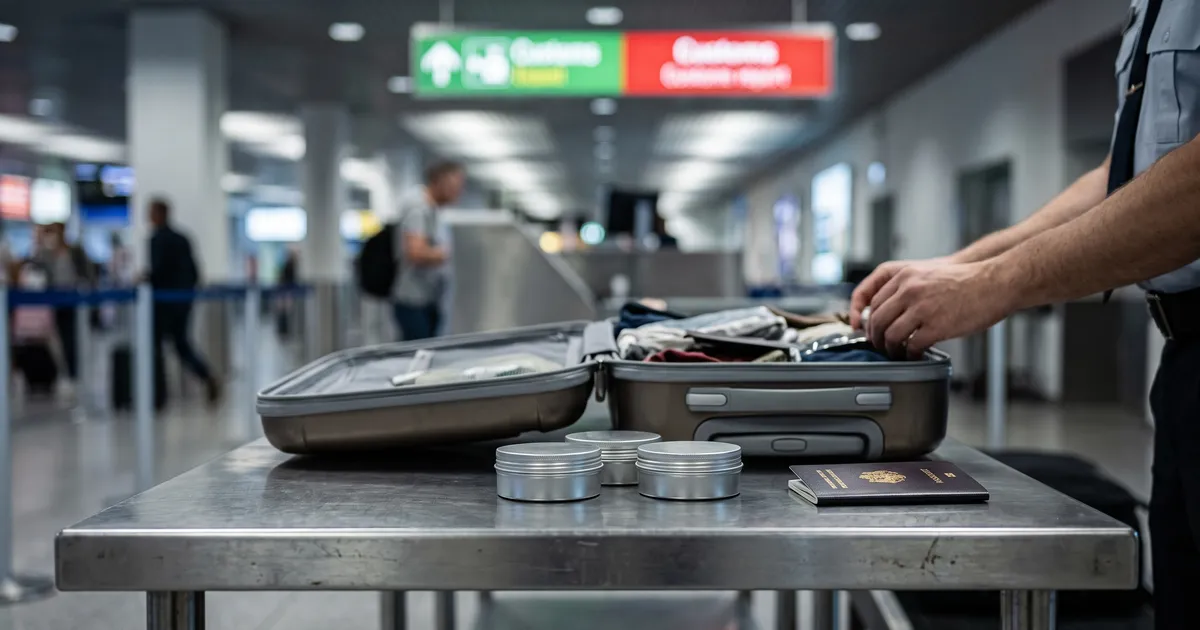
Travelling with nicotine pouches: what customs actually says, country by country
There is no European allowance for nicotine pouches. The law of the country you enter is what applies, and where they are banned the permitted quantity is zero.
Rolling Tobacco vs Packaged Cigarettes: The Price Gap Explained
Rolling your own cigarettes has long cost less than buying a pack. But where does that gap come from, and will it last? We break down the tax and the real cost per cigarette.
Nicotine replacement therapy (patch, gum, spray): how it works and how effective it is
Patches, gum, lozenges, sprays or inhalers: a factual overview of nicotine replacement therapy, how it works and its proven effectiveness for quitting smoking.