Tobacco smuggling and the parallel market: understanding the phenomenon
By Bryan Schmitt · Published on June 28, 2026
When a pack of cigarettes jumps from €3.20 in 2000 to over €13 in 2026 in France, while the same product costs around €3 in Tunisia or Andorra, a huge price gap opens up. That gap is the fuel of the tobacco parallel market. Far from the clichés, it is first and foremost an economic phenomenon. This article offers a factual analysis, without ever explaining how to take part in it.
What is the tobacco parallel market?
The term covers distinct realities that must be carefully separated. Not all are illegal, and not all carry the same severity.
- Smuggling: genuine cigarettes, legally manufactured, but brought into a country without paying the taxes due. It is above all tax fraud.
- Counterfeiting: products imitating a known brand, made clandestinely, with no control over composition or quality.
- Legal cross-border purchases: a traveller bringing back tobacco from another country for personal use, within authorised limits. This is perfectly legal.
Blurring these categories distorts the debate: buying a cheaper pack on holiday has nothing to do with organised container trafficking.
Why it thrives: the role of price gaps
The engine of the parallel market is simple: the difference in taxation between territories. In the European Union, taxes make up 70 to 80% of a pack's price, but each state sets its own levels. As a result, a pack can cost over €17 in the United Kingdom, the most expensive country, and around €3 elsewhere.
The wider the gap, the more economically attractive it becomes to buy, transport and above all resell illegally. The parallel market is therefore not an isolated moral anomaly: it is the rational response of clandestine supply to price-sensitive demand.
How big is it?
Measuring an illegal market is inherently difficult: figures rely on estimates (customs seizures, studies of discarded packs, consumption surveys). The orders of magnitude commonly cited place the share of tobacco escaping the official channel at a notable fraction of consumption in several European countries, with no single figure commanding consensus.
These data should therefore be read with caution: they vary widely by country, year and method. What is certain is that the phenomenon is far from marginal and tends to grow as price gaps widen.
The consequences
The parallel market is not just a matter of price. Its effects show on three levels.
- Fiscal losses: every pack sold off the books deprives the state of revenue (health taxes, public funding), potentially several billion euros a year across Europe.
- Health risk: counterfeit products escape all control. Their composition is unknown and sometimes dangerous, whereas legal cigarettes remain harmful but regulated.
- Criminal financing: large-scale trafficking feeds organised networks, money laundering and other illegal activities.
A large parallel market weakens both public health and state finances: it supplies cheaper tobacco while depriving society of the means to repair the damage it causes.
How states respond
Faced with this phenomenon, public authorities combine several levers, increasingly coordinated at international level.
- Traceability: each pack receives a unique identifier that allows its journey to be tracked, from manufacturer to point of sale, and helps spot diversions.
- Customs controls: stepped-up seizures at borders and in ports, where the largest volumes pass through.
- International cooperation: intelligence sharing and treaties, such as the WHO protocol against the illicit trade in tobacco.
The European Union is also preparing a revision of its tobacco directive, sometimes called "TPD3", expected around 2028-2030, which could further harmonise rules and taxation.
Cross-border purchases: the line between legal and illegal
This is the least understood point. Bringing back tobacco bought legally in another country is allowed, provided it is for personal use and within the quantity limits set by regulation. Beyond that, or as soon as there is intent to resell, the act becomes illegal.
The dividing line therefore rests on two criteria: the quantity and the purpose of the product. Moderate personal use stays legal; trading is fraud. When in doubt, only the official customs rules of the country concerned are authoritative.
Related reading
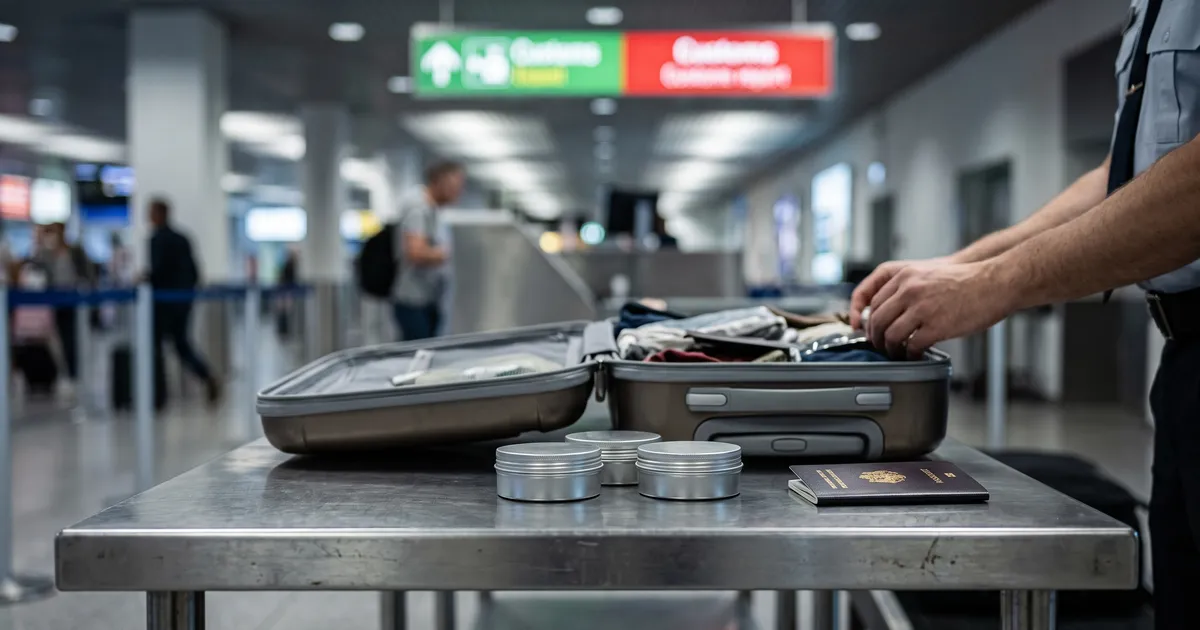
Travelling with nicotine pouches: what customs actually says, country by country
There is no European allowance for nicotine pouches. The law of the country you enter is what applies, and where they are banned the permitted quantity is zero.
Rolling Tobacco vs Packaged Cigarettes: The Price Gap Explained
Rolling your own cigarettes has long cost less than buying a pack. But where does that gap come from, and will it last? We break down the tax and the real cost per cigarette.
Nicotine replacement therapy (patch, gum, spray): how it works and how effective it is
Patches, gum, lozenges, sprays or inhalers: a factual overview of nicotine replacement therapy, how it works and its proven effectiveness for quitting smoking.